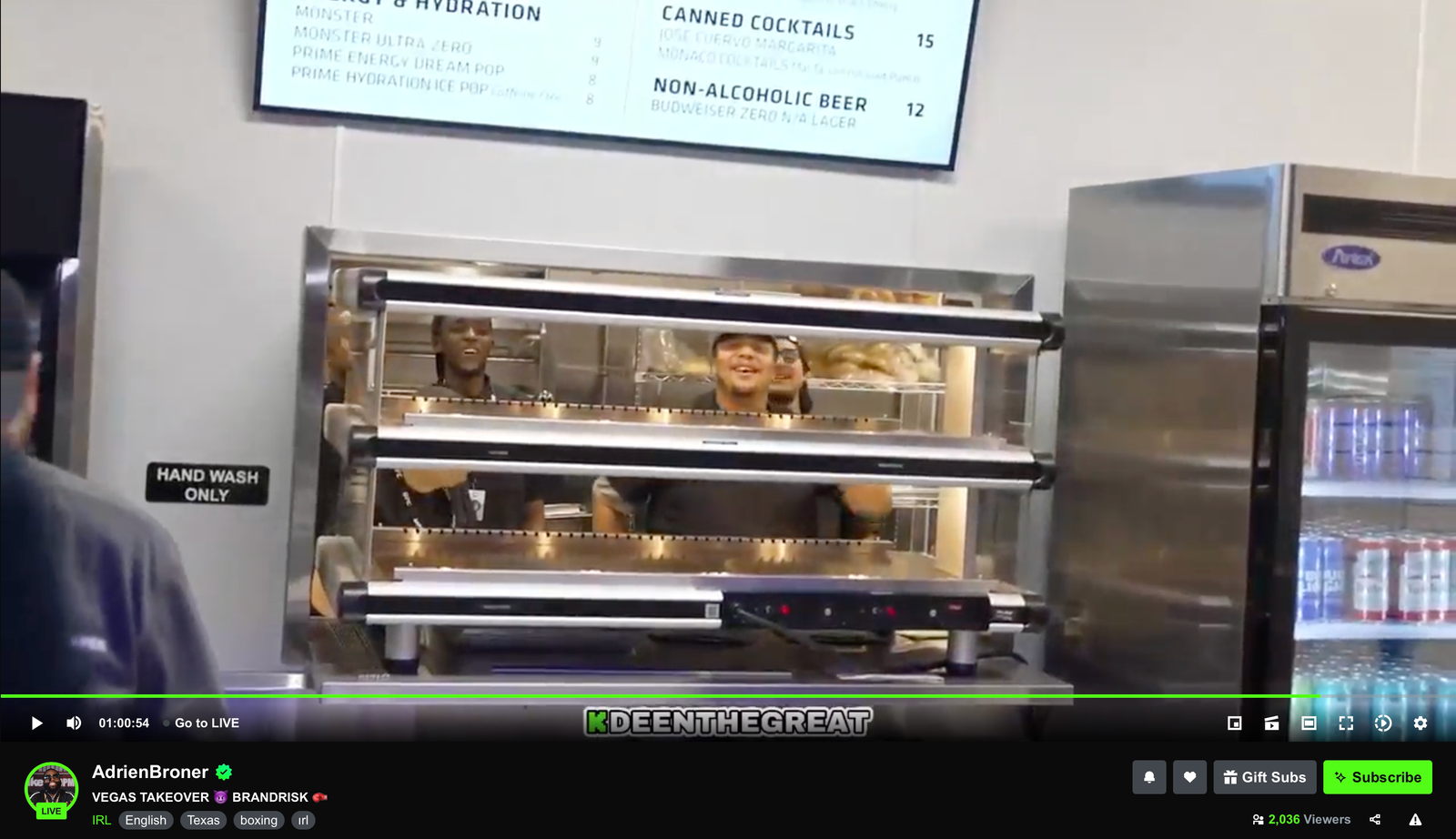
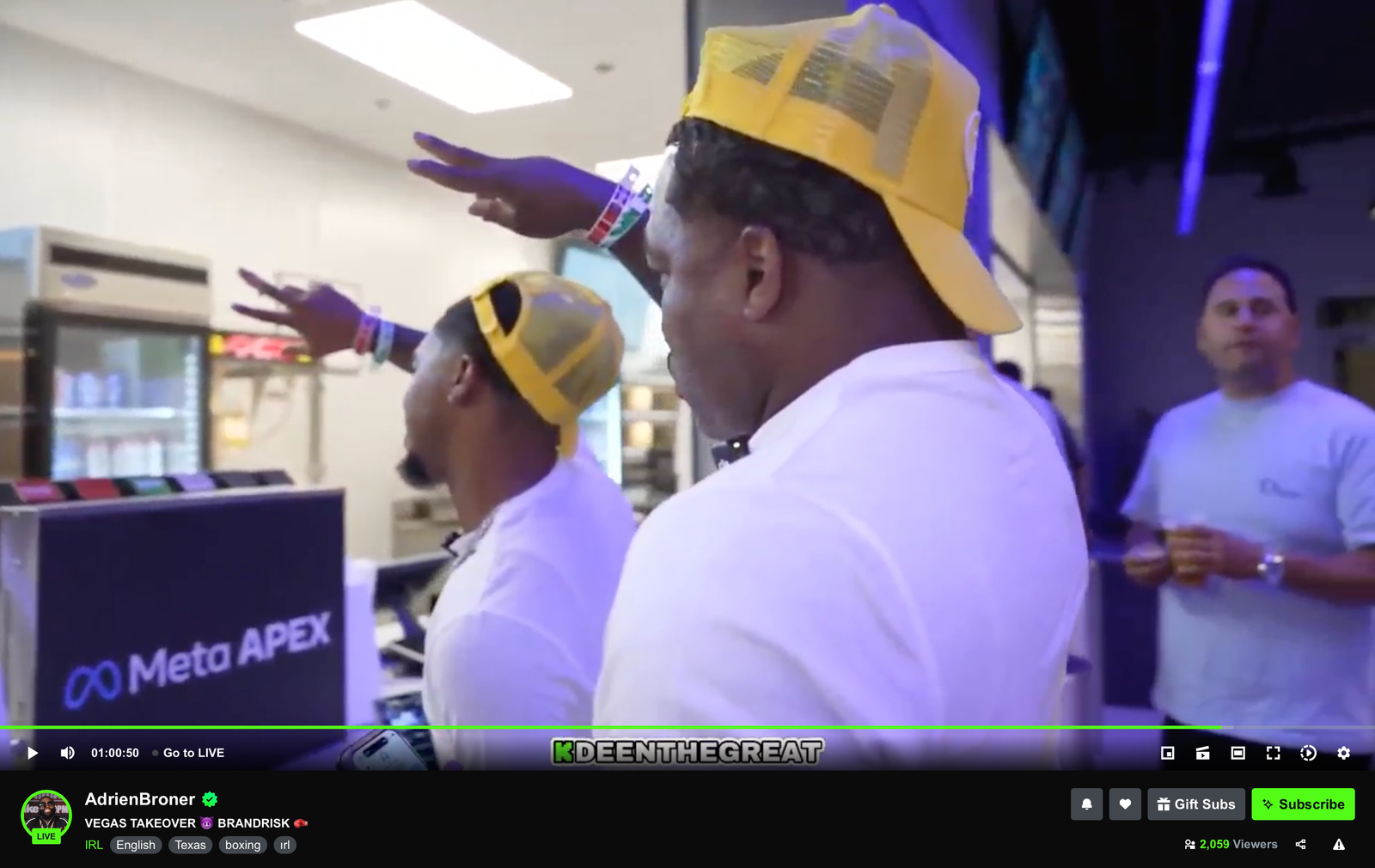
Let me tell you exactly how it started. I was scrolling late on a Friday night, the way you do when you've already watched everything on every streaming service and you're looking for something that feels real. I stumbled onto Adrien Broner's livestream. A B's Live was tagging in and out from a concession stand at some Vegas arena — Deen The Great beside him, yellow hats matching, fans suddenly going wild behind the sneeze guard when they recognized who was ordering their drinks. Two thousand, two hundred people watching. The energy was raw and unscripted. I stayed.
And that was the trap. Not a mean trap. Not a fraudulent trap. But a trap nonetheless — and one that a generation of rappers, athletes, and entertainers have figured out how to set with extraordinary precision. The trap is called IRL streaming. And in 2026, it is one of the fastest-growing revenue machines in entertainment.
What IRL Streaming Actually Is
IRL stands for "In Real Life." Where traditional gaming streamers sit in front of a camera and play video games, IRL streamers strap a camera to their chest, clip a microphone to their shirt, and walk into the world — malls, restaurants, casinos, concert venues, boxing matches — and broadcast their lives in real time to an audience that pays to watch. The appeal is obvious: it feels authentic in a way that scripted content cannot replicate. You never know what's going to happen next. Or at least, that's what you think.
Adrien Broner & Deen the Great — The Rising Tier
What I saw with Adrien Broner and his streaming partner Deen The Great was genuinely compelling. AB is a four-time boxing world champion — a man who, at his best, was one of the most technically gifted fighters in the sport and, at his most chaotic, one of its most entertaining personalities. He and Deen The Great were wandering a Las Vegas arena during what appeared to be a BrandRisk Promotions event, grabbing food, interacting with staff, occasionally getting recognized by real people who genuinely couldn't believe they were seeing Adrien Broner standing in front of a heated display cabinet in a Vegas concourse ordering drinks.
Those fans behind the sneeze guard? Their reaction was completely authentic. You could see the moment of recognition — the double-take, the wide eyes, the scramble to get a better look. The employed security staff standing nearby were unimpressed, the way people who work in entertainment spaces are never impressed by anyone because they've seen everyone. That contrast — genuine civilian amazement versus professional blankness — was the best television I'd seen all week. And it was completely free. For me. Not for the advertisers.
Those fans behind the sneeze guard were real. The check Broner was cashing was also real.
— DonJuanDMack on the Adrien Broner Vegas Takeover streamThen I Found Adin Ross. And the Scale Changed.
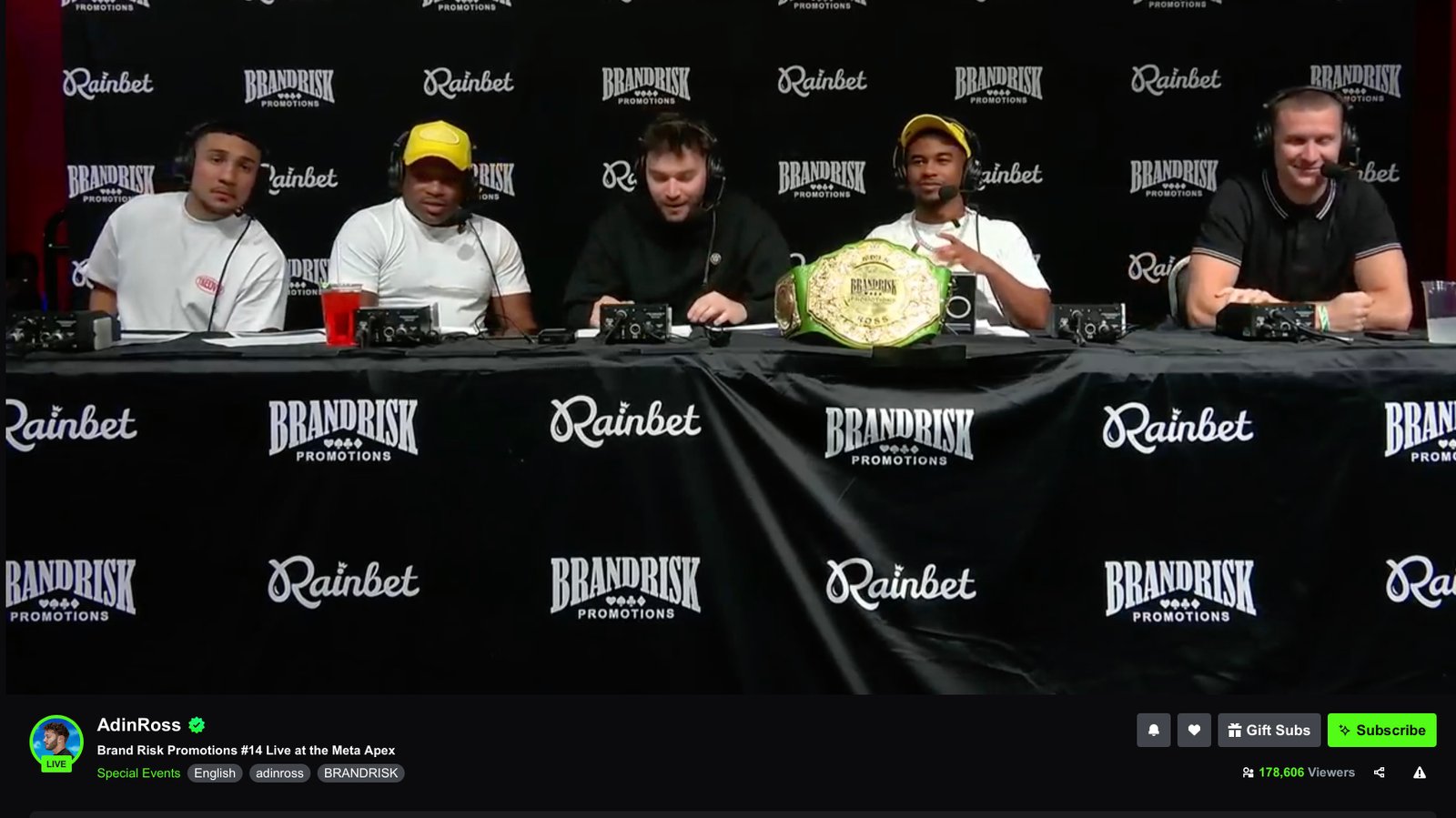
After an hour with Broner, I made the mistake of following a link and landing on Adin Ross's channel. Adin was hosting Brand Risk Promotions #14 at the Meta APEX — a live boxing event with a full panel setup, sponsor banners wall-to-wall (BrandRisk Promotions and Rainbet repeating on every surface), and a championship belt sitting on the table in front of him. The same BrandRisk boxing event that Adrien Broner had been wandering around as a personality was the same event Adin Ross was hosting for 178,606 simultaneous viewers. One hundred and seventy-eight thousand people. Watching a boxing card that, when the cameras showed the actual arena floor, appeared to be performing to an audience consisting almost entirely of other streamers and their security details.
Former UFC champion Rampage Jackson was there. Bodybuilder Larry Wheels was there. A dozen other content creators with their own cameras and audiences were there — each one streaming simultaneously to their own audiences, each audience generating its own ad revenue, each creator feeding the other's content ecosystem. The "empty arena" wasn't a failure. It was a feature. The arena was a studio. The fight was content. The audience was in the livestream chat — all 178,000 of them.
How the Money Actually Works
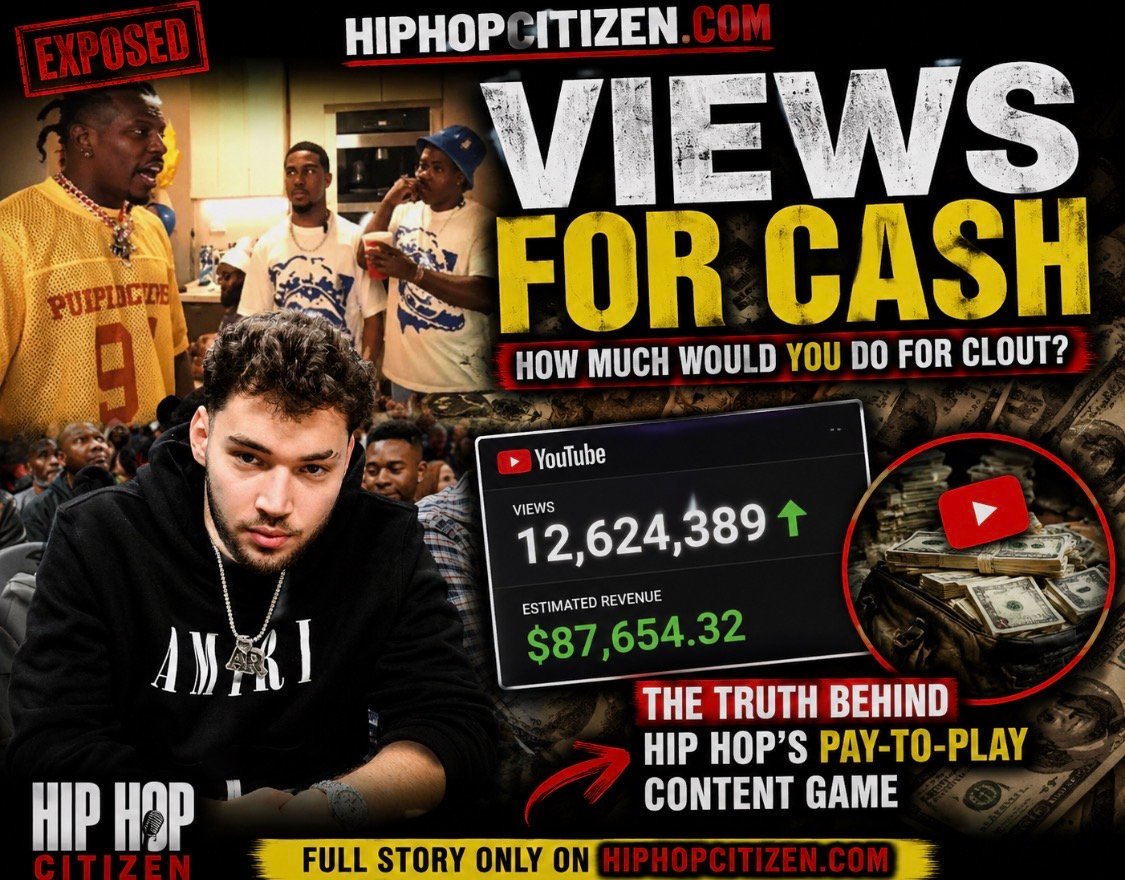
Here's the number that explains why rappers are abandoning the booth for a body camera: a creator with 500 subscribers on Kick earns approximately $2,370 per month — compared to $1,250 on Twitch for the same subscriber count. Scale that to Adin Ross numbers — to 178,000 concurrent viewers with thousands of active subscribers — and a single event generates more money than most artists see from streaming royalties in a year. The music business pays $0.003 per stream. The streaming business pays whenever someone subscribes, tips, or simply watches long enough to see an ad.
Sauce Walker and the Houston Pipeline
Houston rapper Sauce Walker has joined the IRL streaming wave with the same calculation. His streaming presence is a direct extension of his brand — a way to generate ad revenue, promote his music, and build the kind of daily relationship with an audience that social media posts and album rollouts cannot create. He is not alone. Across hip hop, artists who built careers on recording and touring are discovering that a live streaming audience generates more consistent income with less structural overhead than the traditional music industry model. No label cut. No streaming royalty fraction. Direct connection. Direct revenue.
This is not a small trend. It is a fundamental restructuring of how hip hop generates income — and what the culture considers a "successful" career. The artists who figure out IRL streaming soonest will have a direct revenue pipeline that their peers without streaming audiences will spend years trying to build.
The Part That Made Me Put Down My Phone
Here is my honest confession. I spent three hours watching these streams. I watched Broner wander a concourse. I watched Adin Ross host a boxing card that appeared to have no civilian audience. I found myself clicking between streams, following one person to another, getting invested in what felt like spontaneous chaos. Then someone in the chat mentioned that the whole event — the "beefs," the confrontations between streamers, the drama of who would fight who — had been arranged weeks in advance by BrandRisk Promotions as a content event. The "reality" was a production. The spontaneity was scheduled. The drama was scripted.
And I had just spent three hours of my Friday night watching a very expensive, very well-executed piece of advertising content — and the product being advertised was my own attention. I was the product. My three hours of watch time were the inventory being sold to Rainbet and BrandRisk Promotions and whoever else had logos on those banners. The streamers were the distribution mechanism. I was the commodity.
I watched for three hours thinking it was real. It was real. I was the product.
— DonJuanDMack · May 23, 2026 · 2:47 AM · Still watchingThe Culture Needs to Have This Conversation
None of what I described is illegal. None of it is even particularly new — reality television has been staging "spontaneous" drama for thirty years. What is new is the intimacy and the scale. IRL streaming feels closer than TV. The streamer is talking directly to you. The chat is alive. You feel like a participant rather than a viewer. That feeling of participation is precisely what makes the advertising model so effective and precisely what makes it worth interrogating.
Adrien Broner and Deen The Great are genuinely entertaining. Their chemistry is real. The fans at that concession stand were genuinely excited. None of that is diminished by the fact that their stream is also a business. But the culture deserves to understand the business — to understand that when you click, you are not just a fan. You are a unit of inventory. Your attention has a CPM. Your engagement has a dollar value. And the streamers who have figured this out — from Adin Ross at 178,000 concurrent viewers to Sauce Walker building his audience in Houston — are not just entertainers. They are media companies, generating revenue that the music industry cannot compete with at the rates it currently pays.
Hip hop built itself on knowing the game. Right now, the game has moved to a livestream. The culture needs to understand that it moved — and decide whether it wants to play, or just keep being the audience.
DonJuanDMack is the Editor of HipHopCitizen.com. Revenue data in this article draws on Kick, Twitch, and Streams Charts industry reporting for 2026. Viewer counts referenced are from screenshots captured during live broadcasts. Reach him at donjuandmack@hiphopcitizen.com.
Are You the Product or the Player? Drop Your Take.
Did you watch the BrandRisk event? Do you follow IRL streamers? Do you think the scripted drama is entertainment or exploitation? The comments are open — this is exactly what HipHopCitizen exists to debate.